 English
 Spanish


What Makes a Dynamic UPI QR Different From the Sticker on Your Counter
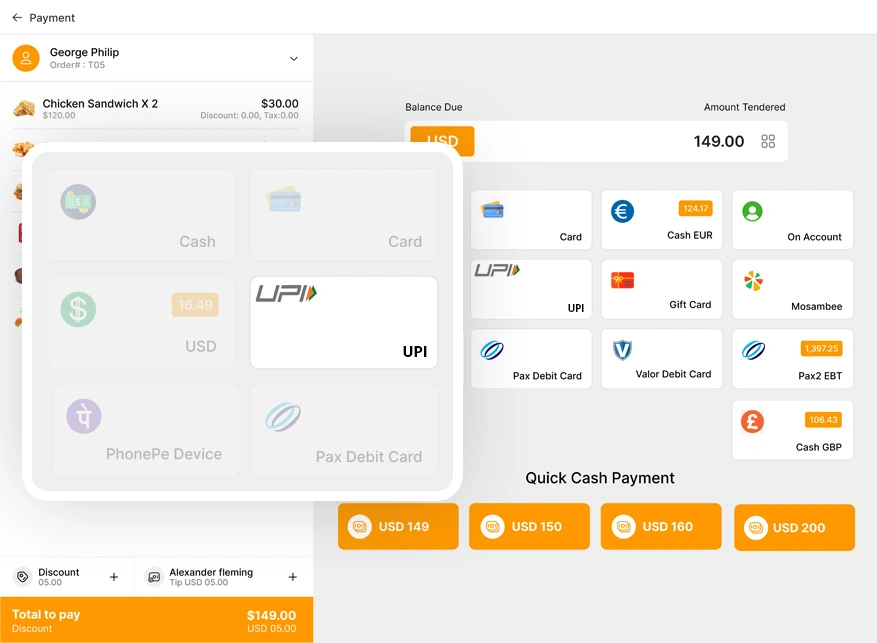
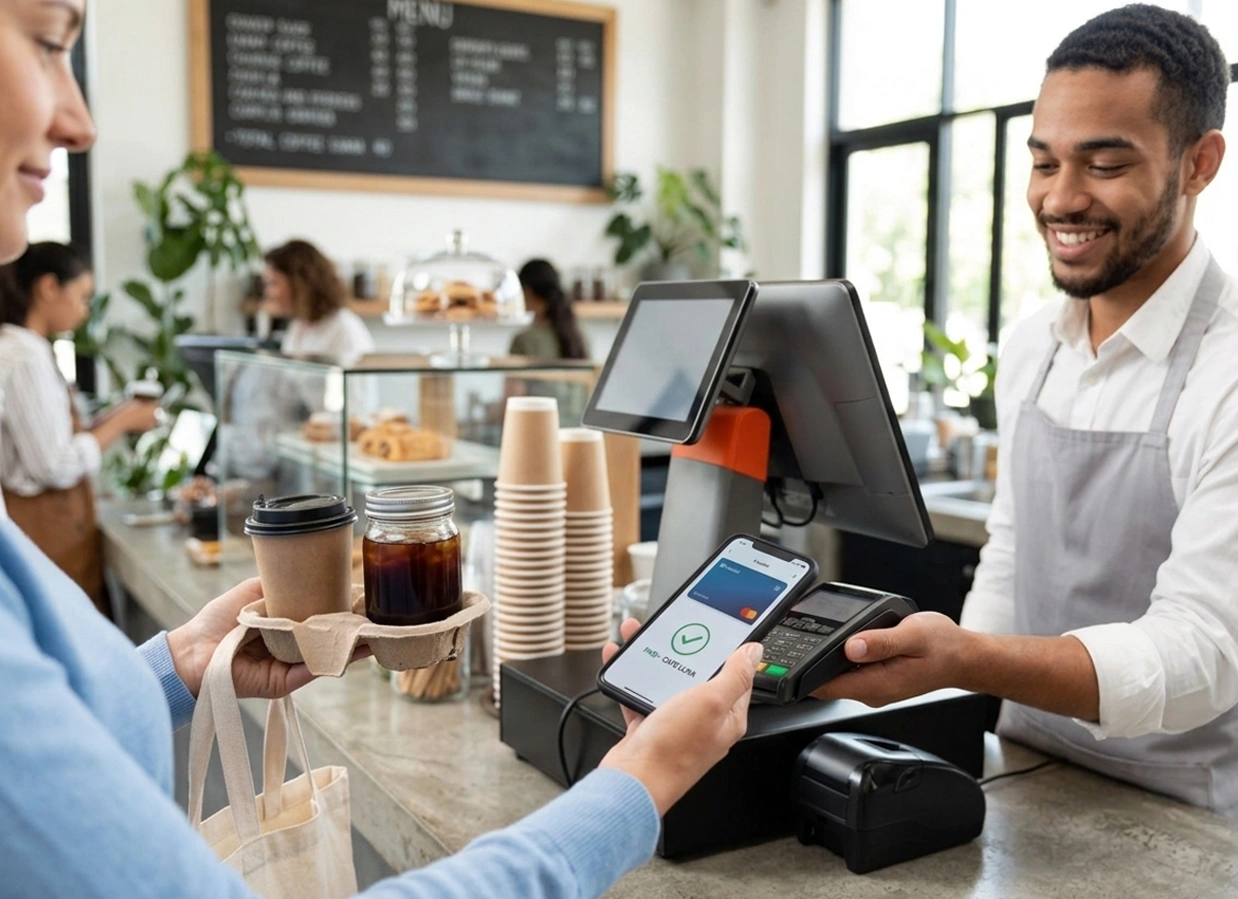
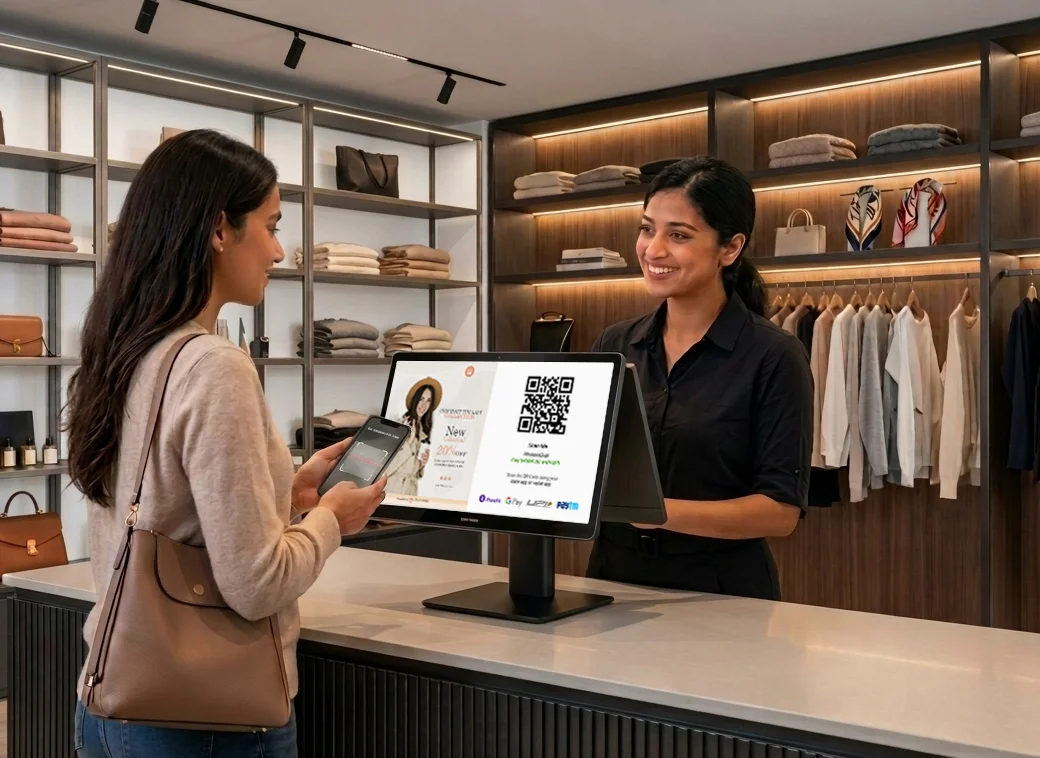
A dynamic UPI QR code is a payment code generated fresh for each individual sale, with the bill amount already encoded in it. The customer scans and confirms — they never type the amount. A static QR, the printed sticker most shops use, is one permanent code for the whole business, so the customer has to enter the amount themselves every time.
 The amount is already in the code - the customer confirms rather than types
- Confirmation arrives at your counter - the cashier does not check a phone
- Each payment is tied to its bill - reconciliation happens as you sell, not after
closing
Every Customer Pays the Exact Amount, Because They Never Type It
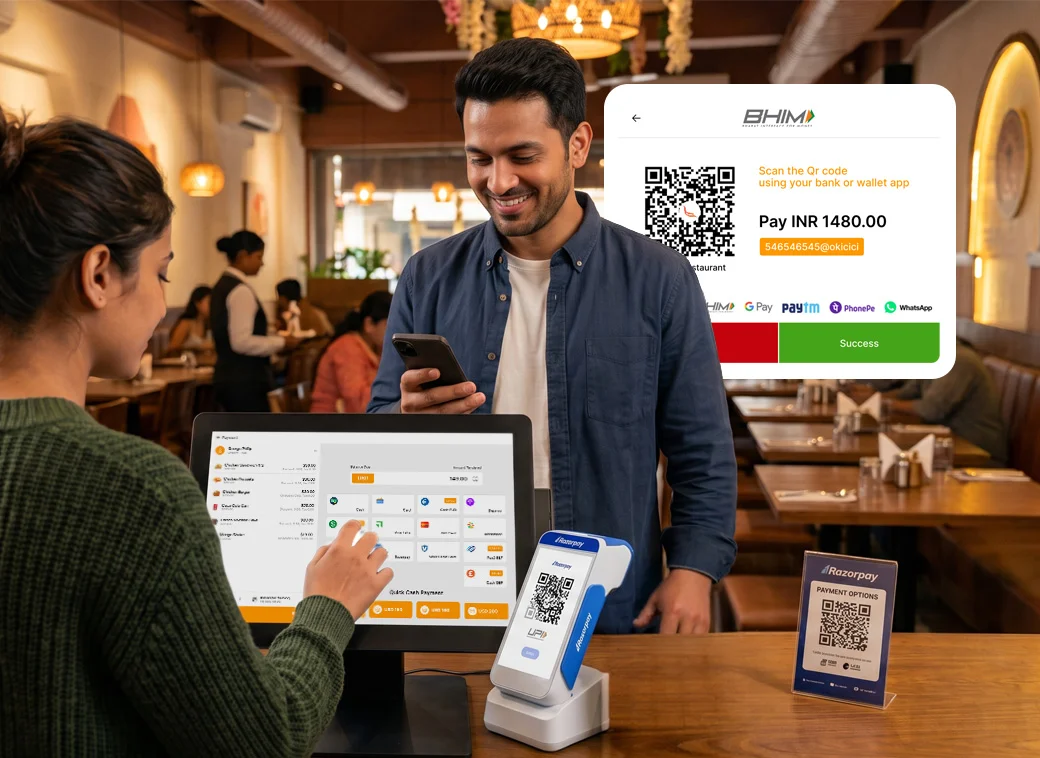
Send a rider out and the money usually comes back as cash, or as a claim that someone paid. With UPI the delivery order carries its own QR, so the customer pays at the door for the exact amount on the bill. Your rider handles no cash, no change and no running total, and nobody settles up from memory at the end of a shift.
- The rider shows the QR, the customer scans and approves
- The amount is locked to that order and cannot be edited
- The payment registers against the order the moment it clears
Clear the Queue Faster Because Nobody Waits to Verify the Payment
Watch a busy counter with a static QR and you will see the same ten seconds wasted on every single transaction. The customer scans. They type the amount. They pay. Then everything stops while the cashier works out whether the money actually arrived — picking up a phone, opening an app, looking for an SMS, or simply asking the customer to turn their screen around.
- Confirmation on the billing screen - not on somebody's personal phone
- No manual verification step - roughly ten seconds saved on every transaction
- No screen-turning standoffs - one source of truth, visible to the cashier
- Receipt prints immediately - the transaction closes itself
- Shorter queues at peak - fewer walkouts when the shop is full
Know Which Bill Every Rupee Belongs To, Without Matching Anything by Hand
A static QR gives you a bank statement full of credits and no idea which sale each one came from. The amounts are there. The bills are there. Connecting the two is somebody's evening. This gets harder the better your day goes. Two customers pay ₹ 500 within the same minute and the statement shows two identical credits. Which was the regular who comes in every week, and which was the walk-in who is going to come back tomorrow claiming they were charged twice? With a static QR there is no way to tell, because the payment carries no connection to the bill.
- Payment attached to the bill at source — not reconciled by guesswork later
- Identical amounts stay distinguishable — two ₹ 500 payments never get confused
- Disputes resolved in seconds — search the bill number, not the statement
Turn Tables Faster by Taking Payment Where the Guest Is Sitting
In a restaurant the payment is the last thing a guest experiences, and it is where a good meal most often turns into a bad memory. The bill goes to the table, the guest wants to pay by UPI, and then one of two slow things happens: they walk to the counter and queue behind people who are still ordering, or a server walks back and forth twice while the table sits occupied and the party waiting at the door keeps waiting.
- Confirmation on the billing screen - not on somebody's personal phone
- No manual verification step - roughly ten seconds saved on every transaction
- No screen-turning standoffs - one source of truth, visible to the cashier
- Receipt prints immediately - the transaction closes itself
- Shorter queues at peak - fewer walkouts when the shop is full

See Every Counter and Every Outlet's UPI Takings in One Place
Static QR codes become harder to manage as a business grows. One shop with one sticker is manageable, but four outlets with separate QR codes and accounts create extra work every week.

Close the Day in Minutes Instead of Hunting for Missing Payments
Ask any shop owner what the worst part of the day is and it is rarely the selling. It is the half hour after the shutter comes down, sitting with a till, a phone and a POS report that refuse to agree with each other.
Keep Your Retail Counter Moving Through the Evening Rush
Retail payments are fast and repetitive, and that is exactly why a static QR hurts here. A grocery or supermarket counter may take several hundred payments a day, most of them small, many of them from customers who are in a hurry and holding bags. Every extra step is paid for several hundred times over.
-
Accept payments through in-store and online channels
-
Improve checkout speed and customer convenience
-
Reduce manual payment-entry errors
-
Simplify daily sales and payment reconciliation
-
Manage business operations from one POS platform